Chicago UK Tour

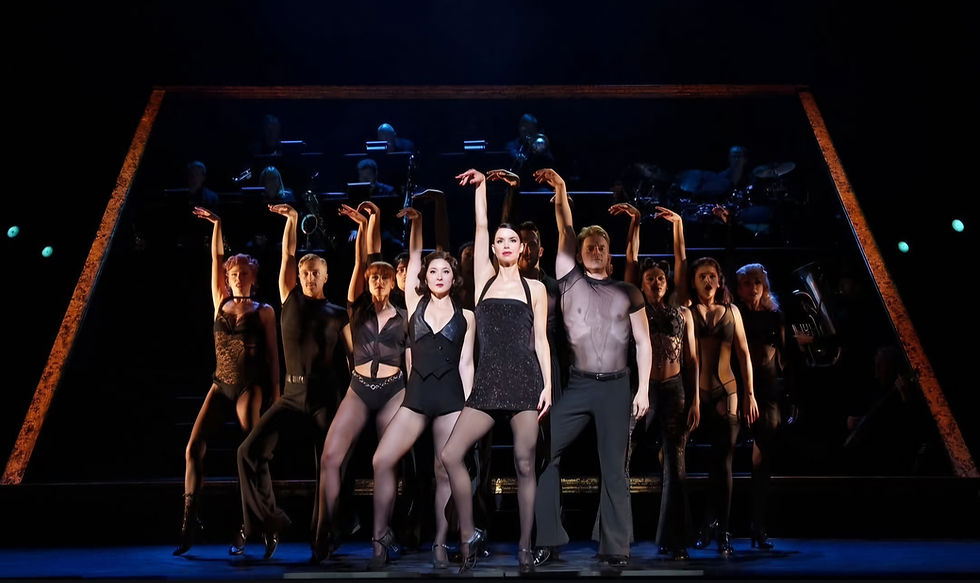
Set amidst the razzle-dazzle decadence of the 1920s, CHICAGO is the story of Roxie Hart, a housewife and nightclub dancer who murders her on-the-side lover after he threatens to walkout on her. Desperate to avoid conviction, she dupes the public, the media and her rival cellmate, Velma Kelly, by hiring Chicago’s slickest criminal lawyer to transform her malicious crime into a barrage of sensational headlines, the likes of which might just as easily be ripped from today's tabloids.
The direction by Walter Bobbie was... fine. Just fine. It wasn’t offensive, but it also didn’t spark much excitement. One particularly baffling choice was having cast members lounge at the side of the stage when not performing. It felt more like a group waiting for a dentist appointment than a dynamic theatrical ensemble. And the opening ten minutes? Moments that should have hit hard—like, say, people getting shot—landed with all the dramatic intensity of a soft sneeze. There was a surprising absence of tension, leaving big scenes feeling oddly muted. Overall, the direction was passable, but not the sort that leaves you buzzing afterwards or even necessarily remembering what you just saw.
Choreography by Ann Reinking and the legendary Bob Fosse, however, brought the much-needed sparkle. When the show hit its stride choreographically, it was magnetic, slinky, and filled with that classic Fosse flair—angled limbs, sharp isolations, and a whole lot of sass. That said, some numbers could’ve benefited from a quicker tempo or tighter pacing. But when it was good, it was downright delightful. The kind of choreography that makes you want to start jazz-handing your way down the street.

Set design by John Lee Beatty left me a little underwhelmed. The decision to keep the orchestra onstage felt more like a space-saving compromise than an artistic choice. It cramped the performers into a narrow slice of stage, so every time they maneuvered around the orchestra it looked like a game of theatrical Tetris. I’m all for minimalism, but this stripped-down aesthetic felt more bare-bones than bold. That said, the ladders and lifts were a nice touch—adding some much-needed vertical movement and variety to the otherwise cramped design.
Lighting design by Ken Billington was one of the subtler highlights. There was a nice mix of patterned textures and moody washes that matched the jazz-noir vibe of the piece. But while it often set the mood effectively, there were a few scenes that could’ve used a more dramatic punch of light—something to really elevate the atmosphere and give those big moments a visual exclamation point.
The recreated sound design by Matt Grounds was... mostly decent. But—and this is a big “but”—whenever anyone decided to whisper, whether in speech or in song, all intelligibility went out the window. I spent more than one scene staring at moving lips and hoping someone else in the audience had subtitles turned on. It’s a shame, because the overall mix was solid otherwise. You just can’t whisper in a musical unless you’re going to bring a megaphone.

Costumes by William Ivey Long were serviceable, but also felt like a missed opportunity. With a set already drenched in black, putting everyone in black costumes made the stage look like a scene from a shadow puppet convention. It’s one thing to go for a unified aesthetic, but this was monochromatic overload. A few splashes of color or texture might’ve helped performers pop more, rather than fade into the set like ghosts of cabarets past.
As for the material itself—the music, book, and lyrics by John Kander, Fred Ebb, and Bob Fosse—it’s okay, but it’s certainly not flawless. The early songs in Act 1 had little narrative impact and felt more like toe-tapping time-fillers than purposeful storytelling devices. The book barely makes a solid impression until the latter half of Act 1, and it’s really in Act 2 that things start to feel cohesive. Some numbers, while catchy, simply don’t serve the plot. It's like being serenaded by someone while they rearrange furniture—entertaining but strangely irrelevant.
Now, to the cast—thankfully, the performances were the night’s saving grace. Faye Brooks was an absolute powerhouse, delivering a performance that blended comedy, sass, vulnerability, and raw emotion. Her portrayal was multi-layered, magnetic, and completely unforgettable. Kevin Clifton, on the other hand, turned in a more reserved performance. He wasn’t bad, just noticeably flatter in contrast—like switching from champagne to tap water. Brenda Edwards? Show-stealing despite her limited stage time. Her vocals were dynamite, and she infused her character with so much presence that it left you wishing she had more to do. And Joshua Lloyd? His “Mr. Cellophane” was heartbreakingly good—so good, in fact, that it earned a thunderous response. His performance may have been brief, but he made every second count and left the audience in love with his character by the curtain call.
In summary, this production of Chicago was a mixed bag. While some of the choreography and performances were electric, other elements—from the uninspired staging to some sluggish pacing—felt like they were just going through the motions. A few songs dragged, and the visuals leaned toward dull and monochromatic. If you’re booking a ticket, do it for the stellar cast rather than the production as a whole. You’ll come for the show, but stay for the cast, who manage to breathe life into an otherwise dimly lit affair.


Comments