Interview with Jack Kelly
- Jack Stevens

- May 29, 2025
- 5 min read
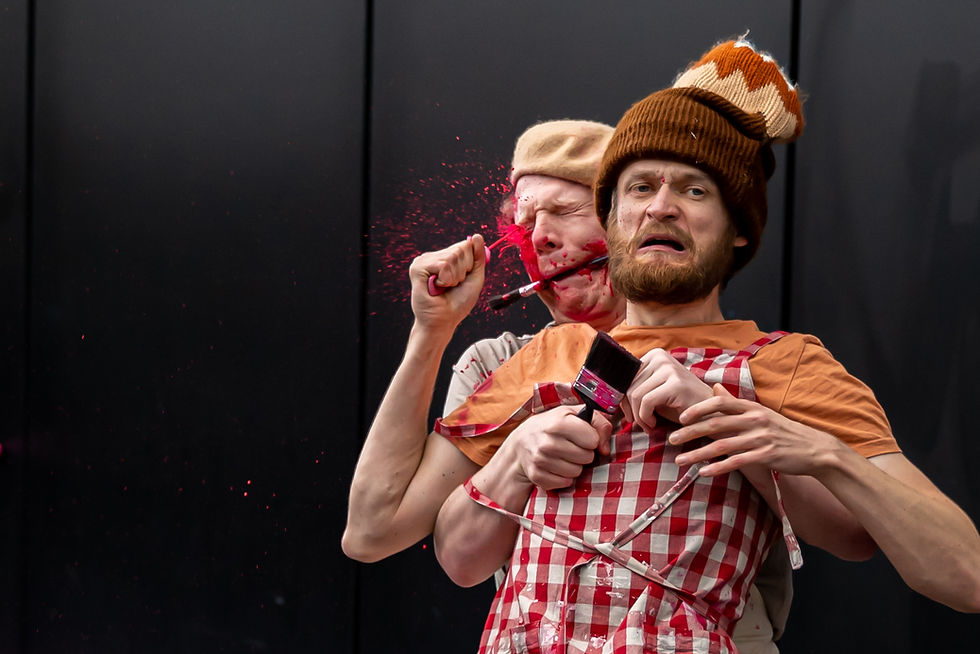
What was the initial spark that led to the creation of SPLAT!?
The Picasso quote. ‘All children are born artists, the challenge is to remain one as they grow up’ pretty much sums it up. That struggle between being neat and tidy and ordered and together versus the instinct to make a mess and play. That’s really at the heart of the show. How do you rein those two horses in so one doesn’t dominate the other. That’s at the centre of being an artist, (and an adult I find!) and it’s something I think children have to grapple with every day. The expectations placed on them by school, parents and the world around them.
How did your collaboration with Brian Duffy influence the shape and accessibility of the show?
Duffy is an amazing creative force. Because of his lived experience, being deaf since the age of three, he has an incredible focus on the visual which is perfect for a show like SPLAT!. I remember he noticed certain details about famous paintings that I had missed but adding those details really elevated it to the next level. Working with Duffy also gave us the confidence to do away with words. It became really obvious that we didn’t need them. If anything, they got in the way.
What was the devising process like for a piece aimed at such a young age group?
We tried to keep the energy in the room playful and light, if we were getting bored that’s a good sign that small children would so we did everything to keep it silly, keep ourselves laughing and curious. We like to invite different creatives into the room at different times. We had stand-up comedians, street performers, clowns, dancers, illustrators and artists. That really helped keep it fresh and allowed us to integrate all of these perspectives into the show.
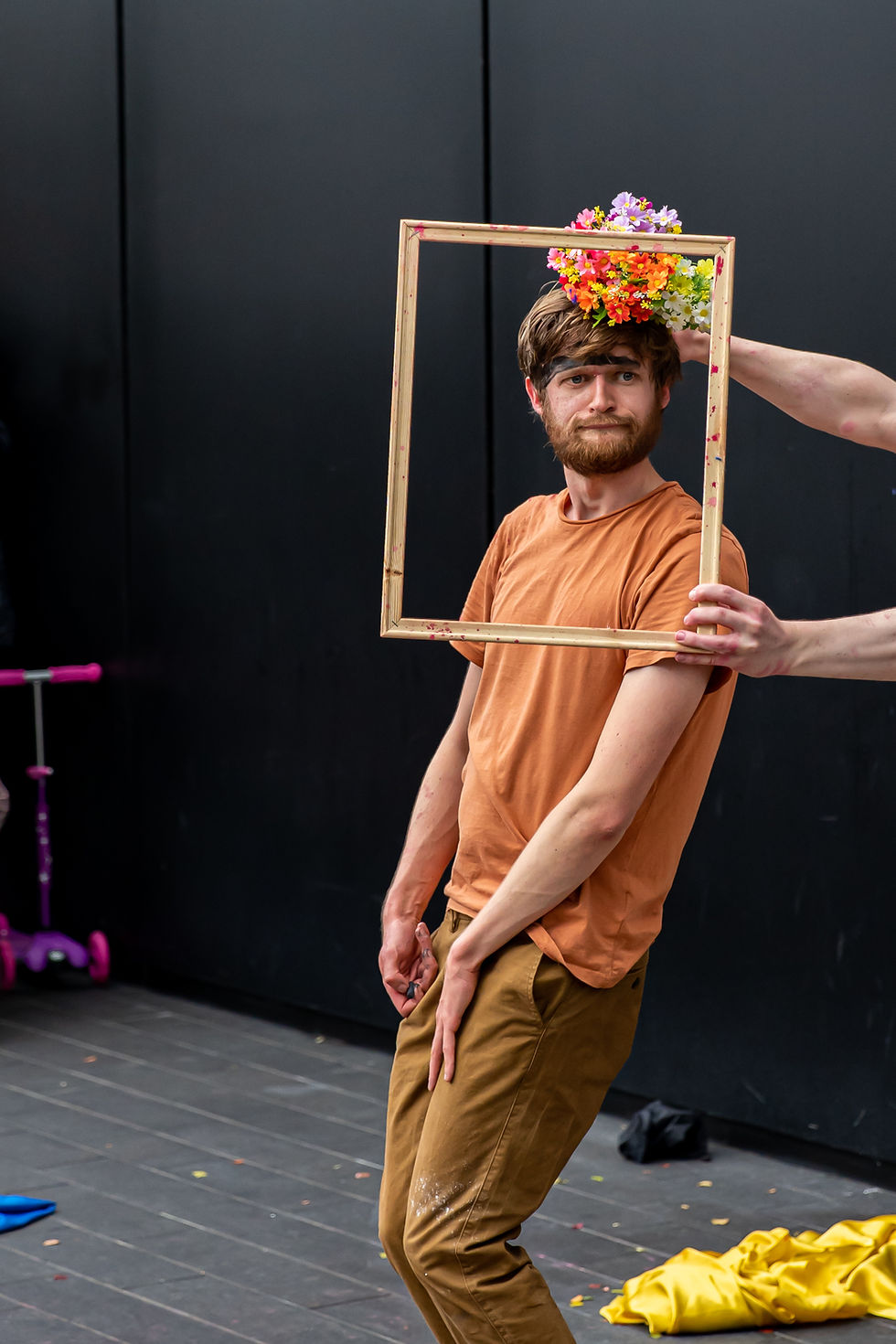
How did you approach representing different artistic movements in a way that’s fun and understandable for children?
To be honest we tried not to think about it too much. I think that was the secret. We tried to find fun, playful and imaginative ways to recreate the paintings rather than try to be accurate. Most of the children won’t know a Van Gogh from a Frida Kahlo but that doesn’t spoil their enjoyment of the show. It’s an opportunity for them to be introduced to those famous art works and learn about them later if they’re interested. The focus was on choosing artworks that were visually interesting and hopefully recognisable. The children tend to interpret what they’re seeing in a very visual way. It’s lovely to hear them offer ideas on what things might be. You’ll often hear ‘Thats the sea or stars or sunshine!’ Older children and adults get a kick out of naming the artworks. The younger children enjoy the spectacle, the colours and the movement. Everyone young and old seems to enjoy the slapstick.
How do you balance structured storytelling with the sense of chaos and play that SPLAT! celebrates?
Well, as we looked into artistic movements, we found that they offered a really useful narrative structure. One movement might be quite ordered and balanced like Renaissance art for example, and another might be complete chaos like Surrealism so that was a huge help in structuring the show. Again, the art works themselves proposed an energy too… some are big and bold some are softer and more lyrical so it was really a question of allowing the art to do the work. Listening to what they proposed.
How do you ensure the experience remains engaging across such a wide developmental range (ages 3 to 7 and adults)?
You try and find moments that will land for everyone. It’s very satisfying when it does. An audience of several generations laughing as one is a lovely moment to experience. Whilst at the same time you add layers for different age groups. For example, the colours and shapes go down really well with small children, even younger than our target audience. Two adults falling over and squirting paint at each other seems to delight all age groups. The slightly older children and adults, particularly the grandparents really get a kick out of guessing the artworks.
How did the educational shifts during the pandemic inform your approach to children’s creativity and learning?
Several experts in the field pointed out during the pandemic that what children needed to compensate for the disruption they experienced during the lockdowns wasn’t more schooling but rather more play. They needed the opportunity to freely interact and play with their peers. That really struck a chord with me and was a big part of the inspiration behind the show. For me I think the show makes that connection between the great artists and the childlike state of play. Something that I think all of us, especially us grown-ups need to be reminded of sometimes. There’s a great quote and I’m not sure who said it,
‘You don’t stop playing because you get old, you get old because you stop playing’
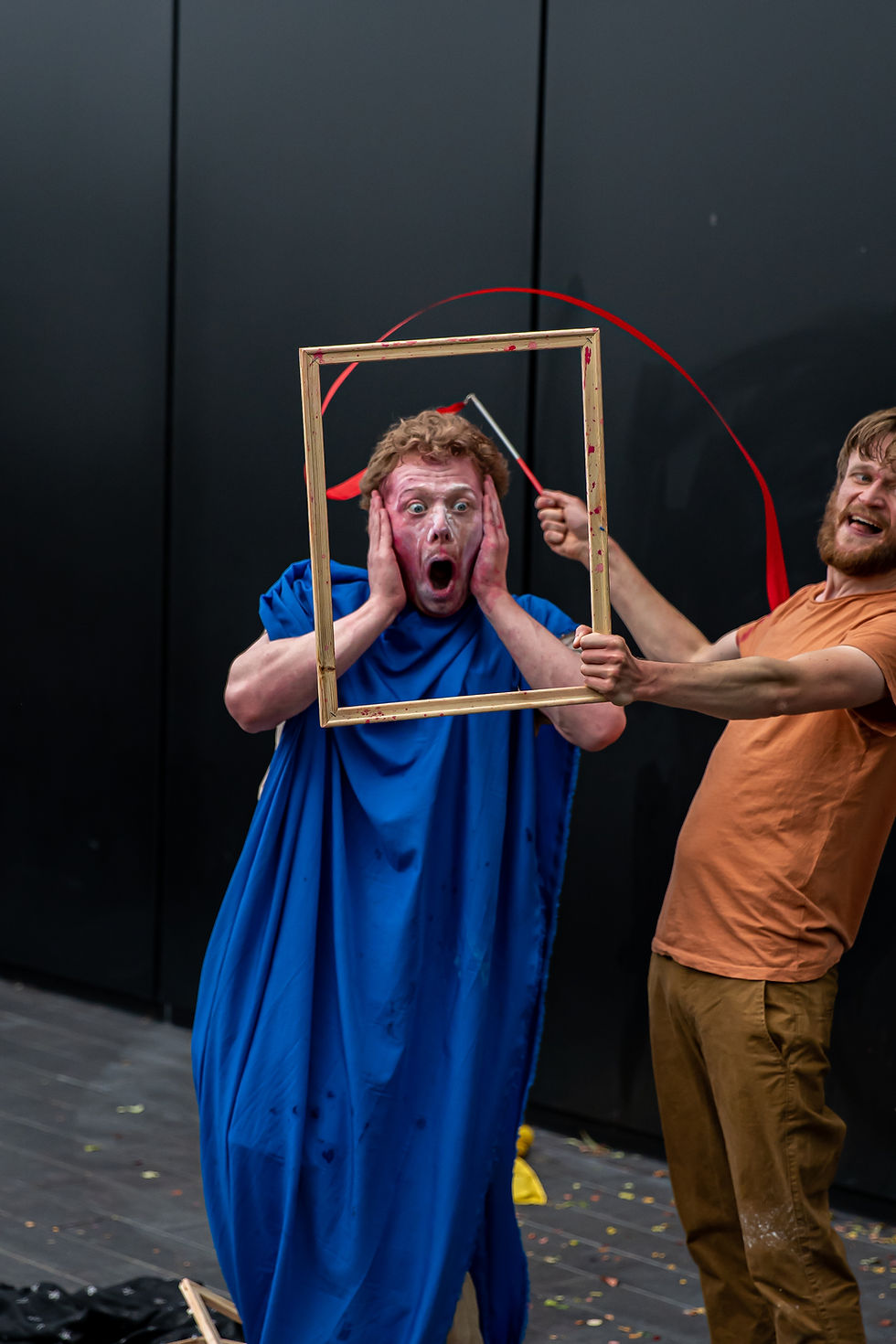
What do you hope children take away from SPLAT!?
I hope SPLAT! makes children want to go out and play, to make a mess, to create. To be honest I don’t think children need much encouragement to do that, but I hope that this show helps them to see that they have an amazing ability and how important that is. I hope that adults are reminded of that too and make more time in their lives to play.
How did the process of visual and lighting design help guide the storytelling?
The lighting was designed by the amazing Berta Pibernat Trias. We have worked together a lot. Her work is incredible as she’s a storyteller at heart via the medium of light. She uses light to bring the various periods to life and the whole design is so full of colour. From the minute you walk into the theatre the lighting is already inviting you into this world. There is something interesting to look at on stage and that foreshadows what is coming once the action begins. In terms of the design, it was very organic. We limited ourselves to minimal elements and used only what was essential. Working in this way allowed us to use the stage as a blank canvas and coupled with the lighting the two elements harmonised really well with the physicality of the performers to create something visually very rich.
What role did sound and music play in shaping the emotional beats and pacing of the show?
Music is a huge part of any show we develop. A lot gets used and played with when we are developing a show that you may not hear in the finished piece. We find playing with the textures that music offers really adds depth and dynamism to the finished piece. What we found with SPLAT! is that alongside a visual art movement there was quite often a musical movement that echoed it. So, alongside impressionism you have Debussy. With Minimalism in art Mondrian etc, there was also Minimalism in music Steve Reich, Philip Glass et al. For Andy Warhol there was the Velvet Underground, In the 80’s in New York, Graffiti and Hip Hop were closely linked and there was a lot of collaboration between young British artists like Damien Hirst and Britpop bands like Blur.
Were there any technical challenges in creating a show that becomes progressively messier and more chaotic on stage?
Once again, the art movements going from order to chaos and back create opportunities within the show to tidy up! That said the performers do have to be mindful of the detritus that covers the stage by the end. Some venues have gotten a bit nervous when they see the trailer for our show. But we leave no mess behind and have had no complaints….yet!
SPLAT! is on tour until the end of August 2025, including the Greenwich Theatre, London on 8th June. For tickets and more information, visit: https://www.ofthejackel.co.uk/splat


Comments