Ballad Lines ⭐️⭐️⭐️⭐️⭐️

A forgotten melody pulls Sarah, a queer woman in New York, into the lives of the women who came before her: Cait, her 17th-century Scottish ancestor, and Jean, a spirited Irish teenager a century later. Across three centuries, they face the same defining question: what does it mean to become a mother — and at what cost?
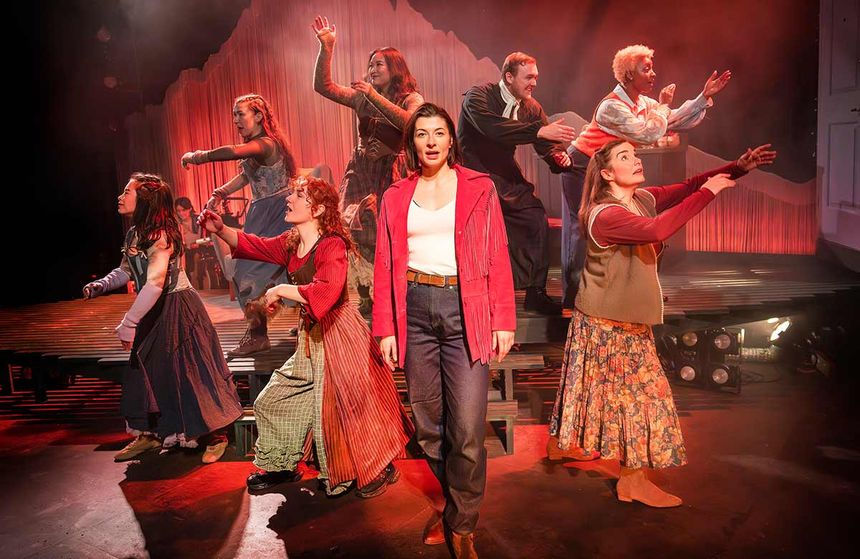
Tania Azevedo’s direction is, quite frankly, a masterclass in how to stage a musical properly. It’s clear, concise, and, crucially, never contradictory. Which gives the entire production a real sense of confidence and cohesion. There’s a real sensitivity in how she handles the multi-generational storytelling, allowing each timeline to feel distinct while still weaving them together seamlessly. Transitions are fluid and almost cinematic at times, never clunky or confusing. She also has a brilliant eye for stillness, knowing exactly when to let a moment sit and resonate with the audience. It’s that balance between precision and emotional openness that makes this direction feel so accomplished.
Ingrid Mackinnon’s choreography is beautifully elegant and quietly intricate. There’s a softness to the movement that feels completely in tune with the piece’s emotional landscape, particularly in the use of hands and subtle gestures that echo the themes of connection and lineage. Rather than overwhelming the storytelling, the choreography enhances it, flowing naturally between scenes and often acting as a bridge between timelines. It’s deceptively detailed work; the more you watch, the more you notice the layers within it. There’s a real sense of continuity and intention that elevates the entire production.
Abby Clarke’s set is absolutely stunning, a real testament to the power of a thoughtfully designed, standalone visual world. It transforms effortlessly from boat to home to something more abstract, all while maintaining a cohesive aesthetic that never feels overcomplicated. The standout feature, the mountain constructed from white cord or string. It gives the production a sense of scale that far exceeds the physical space and becomes a visual anchor throughout. It’s one of those designs that draws you in before a single note is sung.

Christopher Nairne’s lighting design works in perfect harmony with the set to create something truly atmospheric. The way the mountain is illuminated adds a dynamic, almost living quality to the stage. There’s a real understanding here of how lighting can shape emotion, with palettes that feel carefully considered rather than decorative. Some moments are beautifully subtle, gently guiding the audience’s focus, while others are more striking, heightening the drama without ever overwhelming it. It’s a sophisticated and deeply effective design that enhances every aspect.
Sound design, especially with a live band in an intimate venue, is no small challenge. For the most part, the balance is spot-on, allowing both the vocals and instrumentation to sit comfortably together without one overpowering the other. The clarity of the sound helps the storytelling immensely, ensuring that the emotional nuances of both dialogue and song come through. There was a mic pop, but that’s live theatre, it happens, and it certainly didn’t detract from the overall experience. A particularly standout detail is the effect used on Aunt Betty’s microphone during the cassette moments, such a clever, textural touch that adds depth and authenticity.
Julia Smith’s costume design is excellent, offering clear distinctions between time periods while maintaining a cohesive visual identity across the piece. Each costume feels rooted in its era without becoming overly literal, striking a lovely balance between authenticity and theatricality. There’s also a strong sense of character embedded in the designs, each look tells you something about the person wearing it. Visually, it’s a gorgeous collection of costumes that enhance both the storytelling and the overall aesthetic of the production.
The book is deeply moving and thoughtfully constructed. Finn Anderson and Tania Azevedo have created something that feels both intimate and far-reaching, exploring themes of motherhood, identity, and autonomy in a way that resonates strongly with contemporary audiences. The writing avoids heavy-handedness, instead allowing the emotional weight of the story to emerge naturally through the characters and their experiences. Structurally, it’s well-paced, with a rhythm that keeps the audience engaged while still allowing key moments the space they need. It’s the kind of storytelling that quietly builds before delivering a real emotional punch.

Finn Anderson’s score is absolutely beautiful, blending folk influences with original compositions to create a rich and cohesive musical landscape. There’s a consistency in tone that runs throughout the piece, helping to unify the different timelines while still allowing each to feel distinct. The lyrics keep the emotional core front and centre, ensuring that every song feels purposeful and connected to the narrative. Crucially, there’s no sense of filler, each number either drives the story forward or deepens our understanding of the characters. It’s a score that feels both musically satisfying and dramatically essential.
The performances across the board are exceptional. Frances McNamee, Rebecca Trehearn, and Kirsty Findlay lead the piece with incredible emotional clarity, each bringing a distinct presence while still feeling part of a unified whole. There’s a raw honesty to their performances that makes the generational connections feel tangible rather than conceptual. And the fact that they cried just shows you there talent and how committed they were to telling the story. Vocally, the cast are outstanding, delivering the score with both precision and genuine emotional weight. It’s one of those ensembles where the chemistry is undeniable, and it makes all the difference.
Ballad Lines is, quite simply, a masterclass in how to do a musical right. Every element, from direction to design to performance, works in harmony to create something that feels both polished and deeply human. It’s emotionally rich without being overwhelming, visually striking without being distracting, and anchored by a story that genuinely stays with you. A truly special piece of theatre that reminds you exactly why live performance matters.


Comments